
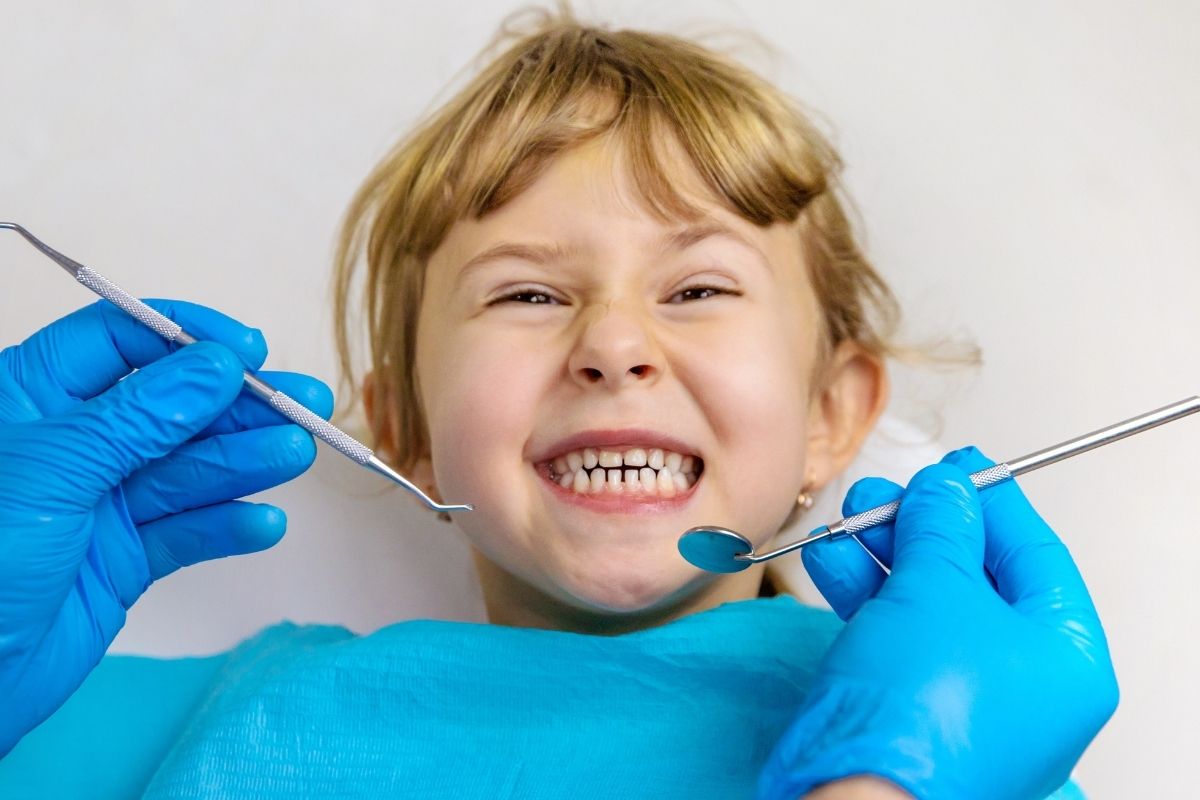
Have you noticed your child’s teeth growing in crooked, crowded, or overlapping? You are not alone. Many parents start noticing these changes during the early school years and wonder what is causing them. The truth is, crooked or crowded teeth in kids rarely happen by chance. There are real, identifiable reasons behind them, and the earlier you catch the signs, the easier it is to help.
Let’s walk through the most common causes of dental misalignment in kids, so you know exactly what to look out for.
Why Do Kids Develop Crooked or Misaligned Teeth?
1. Genetics and Family History
One of the biggest factors in dental alignment is simply the family you come from. If a parent or grandparent had crowded teeth, an overbite, or an underbite, there is a good chance their child may develop the same issue.
Genetics determines jaw size and tooth size. When the jaw is too small for the incoming adult teeth, crowding happens. When the upper and lower jaws do not match in size, bite problems can follow. This is not something families can prevent, but it can absolutely be treated.
2. Prolonged Use of Pacifiers or Thumb Sucking
This one surprises many parents. Babies and toddlers naturally use pacifiers and suck their thumbs for comfort. But when these habits continue past age 3 or 4, they can begin to shift the teeth and alter the shape of the jaw.
The constant pressure from a thumb or pacifier pushes the front teeth forward. Over time, this can create an open bite- a gap between the upper and lower front teeth even when the mouth is closed. This is one of the more common causes of misalignment seen in younger children.
3. Early Loss of Baby Teeth
Kids in Spring stay active all year long, playing soccer at the parks, riding bikes through the neighborhood, and joining school sports leagues. With all that activity, accidents happen, and baby teeth sometimes come out too early.
When a baby tooth is lost before the adult tooth is ready to come in, the surrounding teeth tend to drift into the space. This leaves little room for the permanent tooth to grow in properly. The result is crowding, rotation, or teeth coming in at an angle. Early tooth loss due to decay can cause the same problem.
4. Mouth Breathing
Many parents are surprised to learn that how a child breathes can affect their dental development. Children who regularly breathe through their mouths, often because of allergies, enlarged tonsils, or a deviated septum, tend to develop narrower upper jaws over time.
Mouth breathing changes the resting posture of the tongue. Normally, the tongue presses against the roof of the mouth and helps widen the upper jaw naturally as the child grows. When a child breathes through the mouth, this natural widening process does not happen. The jaw stays narrow, and there is not enough room for the teeth to come in straight.
Spring’s warm, humid weather and high pollen seasons can be tough on kids with allergies, making mouth breathing especially common in this area.
5. Tongue Thrusting
Tongue thrusting is when a child pushes their tongue forward against the teeth when swallowing, speaking, or even at rest. It is a fairly common childhood habit, but it puts steady pressure on the front teeth.
Over time, this pressure pushes the upper and lower front teeth outward, leading to a “flared” appearance or an open bite. Tongue thrusting is often related to prolonged bottle-feeding, thumb sucking, or simply a habit that was never corrected.
6. Crowded or Impacted Teeth
Some kids simply inherit smaller jaws. As the adult teeth come in, there may not be enough space for all of them. Teeth can come in overlapping, rotated, or pushed to unusual angles. In some cases, a tooth becomes impacted, meaning it cannot fully break through the gum line because another tooth is in the way.
Crowding is one of the most common reasons kids are referred to an orthodontist in Spring. It can often be spotted in early X-rays before all the permanent teeth have even arrived.
7. Jaw Development Issues and Skeletal Problems
Sometimes the cause of a crooked bite has less to do with the teeth themselves and more to do with the jaw. An upper jaw that is too narrow, a lower jaw that grows forward or backward, or an uneven bite can all contribute to crooked teeth and bite problems.
These kinds of skeletal issues are often easier to address in children than in adults because the jaws are still growing and responding to treatment. Early intervention can guide jaw growth in the right direction and reduce the need for more involved treatment later on.
Give Your Child a Confident Smile with Auburn Lakes Orthodontics
If your child is showing signs of crowded teeth, bite problems, or crooked teeth, early orthodontic care can make a lasting difference. At Auburn Lakes Orthodontics, our team provides personalized orthodontic treatment for kids in a friendly and welcoming environment designed to help children feel comfortable every step of the way.
We offer a variety of orthodontic solutions for growing smiles, including traditional braces, clear braces, palatal expanders, and other early interceptive treatments tailored to your child’s unique needs. Using advanced technology and a kid-friendly approach, families throughout Spring and The Woodlands trust us for high-quality orthodontic care.
Ready to get started with orthodontics for kids? Call our office today at 346-333-0018 to schedule your child’s consultation.
Take Action for Your Child’s Smile Today
Misaligned teeth in kids rarely happen for just one reason. Whether it is genetics, a childhood habit, early tooth loss, or jaw development, the causes are usually manageable, especially when caught early. The children and families of Spring deserve access to excellent orthodontic care close to home.
If you have noticed concerns with your child’s bite, spacing, or the way their teeth are coming in, now is the perfect time to schedule an evaluation. Early orthodontic care can make a significant difference in your child’s long-term oral health.
If you are looking for a trusted orthodontic team near the Auburn Lakes area of Spring or The Woodlands, we invite you to contact our office and speak with our team today.
Frequently Asked Questions (FAQs)
Q1: At what age should a child first see an orthodontist?
The American Association of Orthodontists recommends a first visit by age 7. This allows a professional to check how the teeth and jaw are developing before problems become more serious. Early evaluations help catch issues while they are still easier to correct.
Q2: Can misaligned teeth fix themselves as kids grow?
In most cases, crooked or crowded teeth do not straighten on their own. Waiting too long can actually make treatment more complex. A professional evaluation will tell you whether watchful waiting is appropriate or whether action should be taken soon.
Q3: Does my child need to be in pain for me to schedule a consultation?
Not at all. Many dental alignment issues cause no pain at all, especially in the early stages. If you notice crowding, gaps, teeth coming in at odd angles, or bite problems, that is reason enough to schedule a visit.
Q4: Are braces the only option for kids with crooked teeth?
No. Depending on the child’s age and the severity of the issue, several options are available, including clear aligners, palatal expanders, and early interceptive treatments. A thorough evaluation will help determine the most appropriate path for your child.
Q5: How long does orthodontic treatment usually take for kids?
Treatment length varies based on the type and severity of the issue. Some early treatments are shorter, while full braces or aligner treatment can take 12 to 24 months. A consultation will give you a clearer picture.
Q6: Is it possible to prevent misaligned teeth in kids?
Some causes, like genetics, cannot be prevented. But habits like prolonged pacifier use, thumb sucking, and untreated mouth breathing can be addressed early. Regular dental check-ups and orthodontic evaluations play an important role in monitoring your child’s dental development.